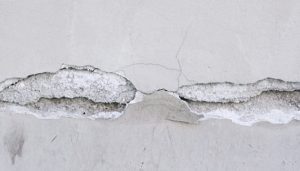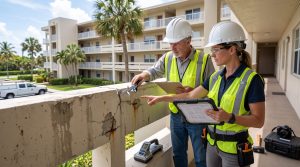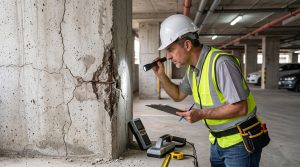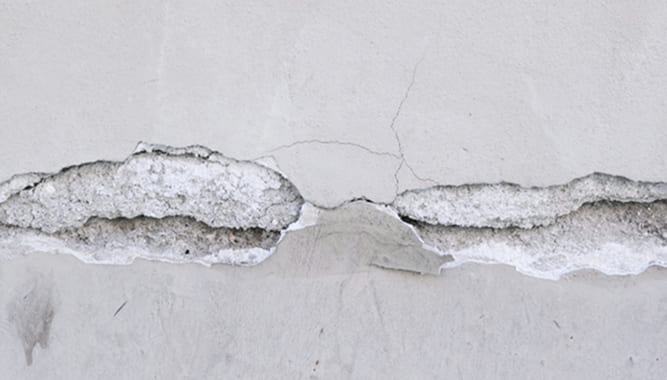
Epoxy injection crack repair is a method that fills a crack in concrete with a low-viscosity structural epoxy, injected under pressure, to bond the two sides back together and restore the member’s continuity. According to the American Concrete Institute (ACI RAP Bulletin 1), it can be used on cracks as narrow as 0.002 inches (0.05 mm).
It is highly effective, but only for the right kind of crack. In coastal South Florida, many cracks in balconies, slab edges and columns are caused by corroding steel, and those should not be injected. At A Plus, we repair cracked concrete for condominium associations, HOAs and property managers in Broward, Palm Beach and Miami-Dade counties.
When Epoxy Injection Works
Epoxy injection is the right choice when the crack is:
- Dormant: the movement that caused it has stopped, such as early shrinkage or a one-time overload that has since been corrected.
- Structural: the crack affects the strength or stiffness of a beam, column, wall or slab, and the engineer wants the section to act as one piece again.
- Clean and dry, or only damp: where a crack cannot be fully dried, ACI recommends a moisture-tolerant epoxy.
- Not caused by corrosion: there is no rust staining and no sign that the reinforcing steel is corroding.
When these conditions are met, the epoxy also seals the path water and chlorides would use to reach the reinforcement.
When Epoxy Injection Is the Wrong Fix
Active cracks
If the crack is still moving because of thermal cycles, settlement or ongoing overload, a rigid epoxy will not move with it. The cause must be corrected first, or a flexible system used instead.
Cracks caused by corroding rebar
This is the most important exception for Florida buildings. ACI RAP Bulletin 1 states that cracks caused by corroding reinforcing steel should not be repaired by epoxy injection, because continuing corrosion will cause new cracks to appear.
Rust occupies several times the volume of the original steel and pushes the concrete apart. Rust stains, a crack along the line of a bar or a hollow sound when tapped all point to corrosion. Injecting that crack seals moisture and chlorides inside, and the steel keeps corroding out of sight.
The correct repair is to remove the contaminated concrete, clean or replace the corroded steel, and rebuild the section, as described in our guide to concrete spalling repair.
Actively leaking, nonstructural cracks
When the only goal is to stop water, polyurethane injection is usually the better tool.
Polyurethane stays flexible and tolerates moisture, so it can seal an active leak, but it does not restore structural continuity. If the crack is also structural, the Engineer of Record (EOR) defines the repair.
Epoxy vs. Polyurethane Crack Injection
| Epoxy injection | Polyurethane injection | |
| Main purpose | Structural bond and sealing | Stopping water leaks |
| Behavior after curing | Rigid | Flexible; some products expand on contact with water |
| Restores structural continuity | Yes | No |
| Works on moving cracks | No | Better suited |
| Works on wet cracks | Only moisture-tolerant formulations | Yes |
How the Right Repair Is Decided
Before any injection, a licensed engineer typically reviews crack width, pattern and location, whether the crack is active or dormant, signs of corrosion and the role of the element in the structure. The difference between structural and cosmetic concrete damage determines whether a structural repair is needed at all. For buildings going through a milestone inspection or recertification, the Engineer of Record specifies the method and the contractor executes it.
The Epoxy Injection Process, Step by Step
- Clean the crack so the epoxy can bond.
- Install injection ports along the crack.
- Seal the surface with an epoxy cap so the resin stays inside under pressure.
- Inject vertical cracks from the bottom up, moving to the next port when epoxy appears there.
- Cure and remove the ports and surface seal.
- Verify with small cores, typically 2 inches in diameter, when the engineer requires it.
Concrete Crack Repair in South Florida Buildings
Salt air, humidity and frequent rain mean a crack in a coastal building rarely stays simple for long. Once chlorides reach the steel, a crack that could have been injected becomes a corrosion problem.
At A Plus we perform structural crack repair, epoxy injection, spalling repair and full concrete restoration, following the Engineer of Record’s approved design. If your building shows cracking in balconies, columns, walkways or parking decks, contact A Plus to plan the right repair.
Frequently Asked Questions
What is epoxy injection crack repair?
It is a structural repair method that injects a low-viscosity epoxy under pressure into a crack in concrete. The epoxy bonds both sides of the crack, restores the continuity of the member and seals the path for water and chlorides.
Does epoxy injection fix structural cracks?
Yes, when the crack is dormant and not caused by corrosion. The epoxy bonds the two faces of the crack and restores the continuity of the concrete member. It can be used on cracks as narrow as 0.002 inches (0.05 mm).
When should epoxy injection not be used?
It should not be used on active cracks that are still moving or on cracks caused by corroding reinforcing steel. For leaking cracks where the goal is only to stop water, polyurethane injection is usually more suitable.
Can rust-stained cracks be repaired with epoxy injection?
No. Rust staining indicates that the reinforcing steel is corroding. Injecting the crack traps moisture and chlorides inside, and corrosion continues. The repair requires removing the damaged concrete and treating or replacing the steel.
Sources
- American Concrete Institute. ACI RAP Bulletin 1: Structural Crack Repair by Epoxy Injection.
- American Concrete Institute. ACI 224.1R-07: Causes, Evaluation, and Repair of Cracks in Concrete Structures.
- American Concrete Institute. ACI 546R-14: Guide to Concrete Repair.
- Florida Legislature. Florida Statutes, Section 553.899: Mandatory Structural Inspections for Condominium and Cooperative Buildings.