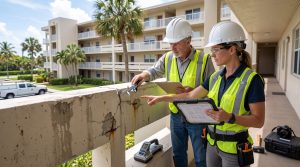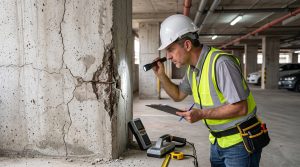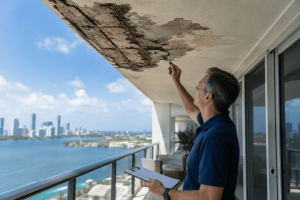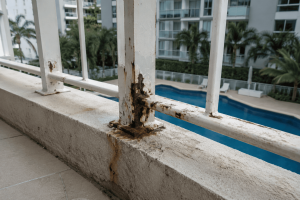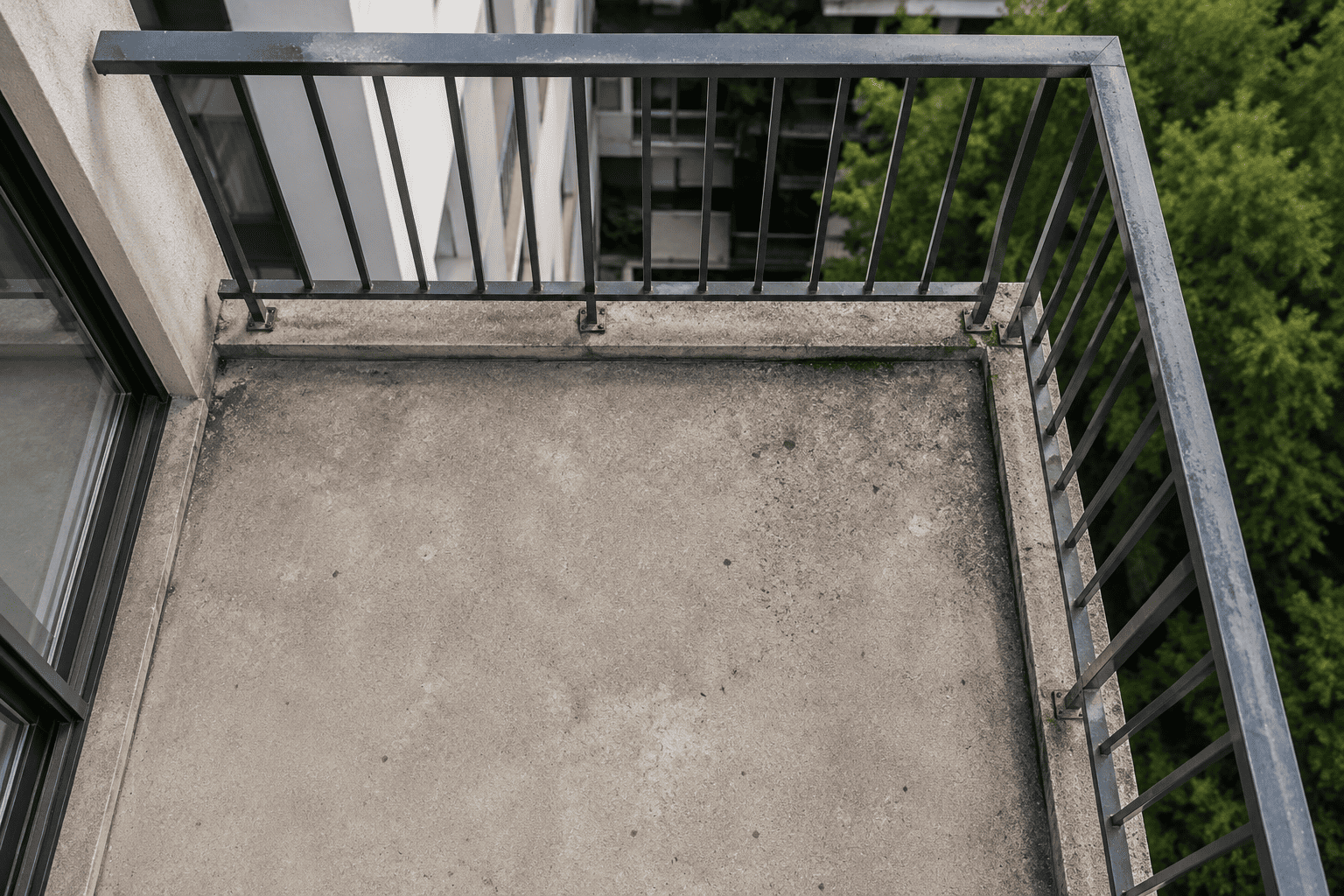
Corrosion of embedded steel is one of the primary drivers of reinforced-concrete deterioration in coastal Florida. It is also one of the least understood by building owners because damage at the surface is often the visible result of a process that began months or years earlier inside the concrete.
This article covers two corrosion mechanisms relevant to concrete restoration and railing connections: chloride-induced corrosion of steel reinforcement and galvanic corrosion involving electrically connected dissimilar metals. For the broader picture of coastal-concrete deterioration, our article What Causes Concrete Deterioration in Coastal Florida Buildings? covers additional factors such as carbonation, moisture intrusion, and temperature and moisture cycling.
How chloride corrosion actually damages concrete
Steel reinforcement inside concrete is normally protected by a passive oxide film maintained by the concrete’s high alkalinity. Near the coast, chlorides from salt-laden air and moisture can penetrate the concrete cover. Once a critical concentration reaches the reinforcing steel, the passive film can break down locally and active corrosion can begin.
Corrosion products can occupy substantially more volume than the steel consumed. Their accumulation creates tensile stresses in the surrounding concrete, which can lead to cracking, delamination, and eventually spalling of the concrete cover. Once the cover is cracked or lost, moisture, oxygen, and chlorides can reach the reinforcing steel more readily and accelerate further deterioration. We discuss repair and prevention in more detail in Concrete Spalling: Causes, Repair Options, and Prevention in South Florida.
The amount of corrosion required to produce visible cracking varies with concrete cover, bar diameter, concrete properties, corrosion-product characteristics, and exposure. The practical point is that corrosion can progress before spalling becomes visible at the surface.
Why metal railings are a corrosion hot spot of their own
Railing posts can create localized corrosion risks. Galvanic corrosion may occur when dissimilar metals are electrically connected in the presence of moisture that acts as an electrolyte. Under those conditions, the less noble metal can corrode faster than it would on its own. Mere proximity between two metals, without an electrically conductive connection and an electrolyte, is not enough to create a galvanic cell.
There are two related failure paths documented in industry and forensic literature:
- Direct aluminum-to-concrete contact. Untreated aluminum embedded in concrete can react with the alkaline environment, particularly when chlorides, moisture, or contact with steel are present. The resulting corrosion can damage the aluminum and contribute to cracking or deterioration of the surrounding concrete. Proper coatings, isolation, and engineered details are important.
- Installation damage. Core drilling or other anchorage work can strike, cut, or expose embedded reinforcement if the steel is not properly located and the work is not performed in accordance with engineered details. Open or poorly sealed penetrations can also create paths for moisture and chlorides. These conditions can contribute to localized corrosion and anchorage deterioration.
These mechanisms can contribute to the balcony conditions described in Concrete Balcony Repairs: Common Issues Found During Inspections. Railing anchorage may also be evaluated when its condition is relevant to the building’s structural or life-safety assessment, as discussed in When Balcony Railings Fail: Safety Risks and Code Compliance in Florida.
How corrosion-related damage is prevented and repaired
- Isolating dissimilar metals using compatible nonconductive sleeves, gaskets, coatings, or other details specified for the railing system and exposure.
- Using anchors, alloys, coatings, and isolation methods selected by the licensed design professional and railing manufacturer for the specific metals, loads, substrate, and coastal exposure. Stainless steel is not a universal solution and may require electrical isolation from aluminum.
- Sealing railing and slab penetrations with compatible systems so moisture and chlorides are less likely to migrate into the concrete or anchor pocket.
- Repairing existing damage in accordance with signed and sealed repair documents. Depending on the specified system, the work may include removing unsound concrete, cleaning, supplementing, replacing, or protecting corroded reinforcement, rebuilding with compatible repair materials, and reinstalling the railing with appropriate anchorage, isolation, and waterproofing details.
FAQ: Corrosion in Concrete and Railings
What is galvanic corrosion? It is accelerated corrosion that can occur when dissimilar metals are electrically connected in the presence of an electrolyte, such as chloride-laden moisture. Under those conditions, the less noble metal corrodes preferentially.
Why does corrosion cause concrete to crack if the steel is embedded? Corrosion products can occupy substantially more volume than the steel consumed. Their accumulation creates internal tensile stresses that can crack and delaminate the surrounding concrete before spalling is visible at the surface.
Can corroded rebar be treated instead of replaced? Sometimes. The licensed design professional evaluates the location and extent of corrosion, section loss, bond, and structural requirements. The repair may involve cleaning and protecting existing steel, supplementing or replacing reinforcement, or a more extensive structural repair, as specified in the repair documents.
Are aluminum railings a bad choice near the coast? Not inherently. Performance depends on the alloy, coating system, anchorage, drainage, isolation from incompatible materials, maintenance, and exposure. Properly designed, fabricated, installed, and maintained aluminum railing systems can perform well in coastal environments.
A Plus Concrete Restoration performs concrete restoration, waterproofing, and railing fabrication and installation in accordance with the applicable engineered documents. To discuss corrosion-related concrete or railing repairs in Broward or Palm Beach County, contact our team for a consultation and repair estimate.
This article is for general informational purposes only and does not replace an inspection, diagnosis, or repair design by a Florida-licensed architect or engineer.