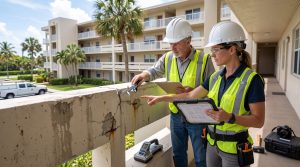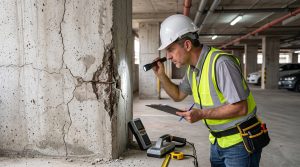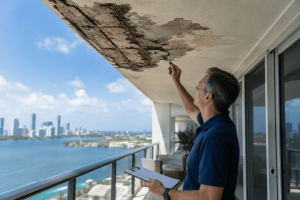
A structural integrity reserve study (SIRS) is a Florida-mandated reserve study that combines a visual inspection of a condominium building’s critical structural components with a funding plan to repair or replace them over time. It is required under Section 718.112(2)(g) of the Florida Statutes, created by Senate Bill 4-D in 2022 and refined by SB 154 (2023) and HB 913 (2025).
Most guides explain who must complete a SIRS and when. This one explains what happens next: what a concrete finding means on site, what work it leads to and how to budget for it. A Plus Concrete Restoration, a certified general contractor based in Margate, executes the concrete repairs these reports identify for condominium associations in Broward, Palm Beach and Miami-Dade counties.
SIRS at a glance
| Question | Answer |
| Who needs one? | Condominium associations with buildings three or more habitable stories tall |
| How often? | At least every 10 years |
| Who performs it? | A licensed engineer or architect, a certified reserve specialist or a professional reserve analyst |
| What does it cover? | Roof, structural systems, fireproofing, plumbing, electrical, waterproofing and exterior painting, windows and exterior doors, and other structural items over $25,000 |
| Key deadlines | Initial SIRS by December 31, 2025; December 31, 2026 if completed together with a milestone inspection due by that date |
Concrete is not a separate line item, but it sits inside or beneath most components:
- Structural systems: slabs, columns, balconies and walkways.
- Waterproofing: balcony and deck membranes.
- Windows and doors: slab edges.
How to read the concrete findings
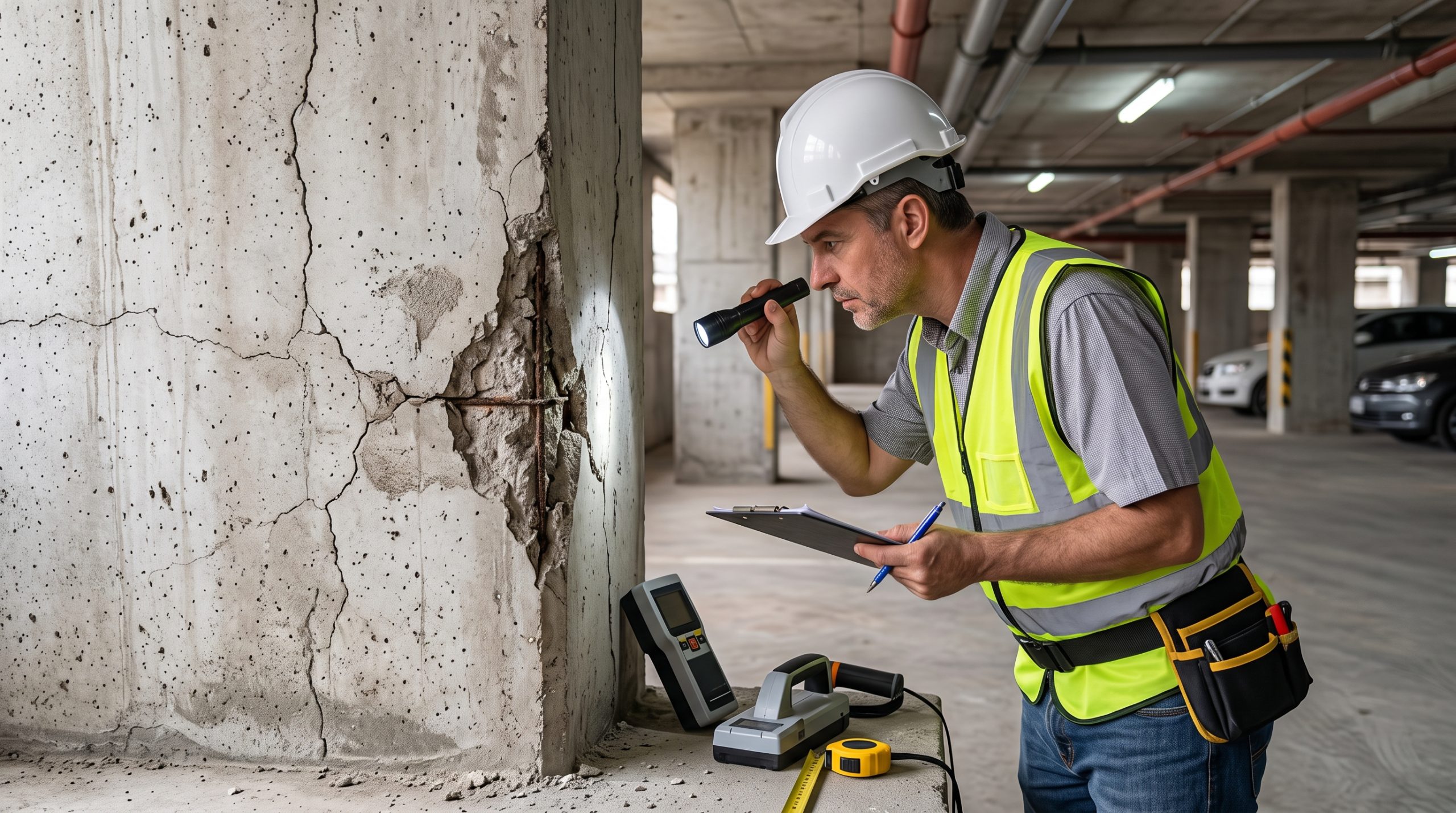
A SIRS is visual. It records what the inspector can see, estimates remaining useful life and assigns a cost. These are the findings that most often lead to concrete work:
| Finding | What it usually means | Typical repair |
| Hairline cracking | Shrinkage or surface cracking; often cosmetic | Monitoring, sealing, coating |
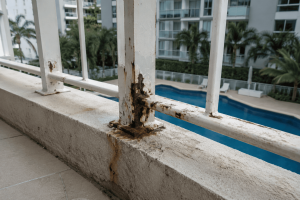
| Cracks with rust staining | Corrosion has started at the reinforcing steel | Localized removal, rebar cleaning and treatment |
| Spalling | Corroding steel has broken the concrete cover away | Partial-depth repair to sound concrete |
| Delamination (hollow sound) | A spall that has not fallen yet | Sounding survey, removal and repair |
| Failed membranes | Open path for water and chlorides | Recoating after the concrete is repaired |
In coastal South Florida, salt carried by sea air pushes chlorides into the concrete. When the chlorides reach the steel, it corrodes and the rust expands to several times the bar’s original volume, cracking the concrete around it. ACI 318 sets a minimum cover of 1½ to 2 inches for reinforcement exposed to weather. Where cover is thinner, deterioration arrives sooner.
Why the concrete number is an estimate
Boards are often surprised when the final repair quantity exceeds the SIRS estimate. A visual study cannot see delamination or corrosion inside the slab; those appear only when damaged concrete is removed. That is why restoration work is usually priced by unit: per square foot of repair, per linear foot of crack or per bar replaced. To keep the budget realistic:
- Ask the engineer for estimated quantities, not only a lump sum.
- Have every contractor bid unit prices against the same quantities.
- Carry a contingency for hidden deterioration and update the SIRS if the funding method changes.
How SIRS connects to milestone inspections
A milestone inspection asks whether the building is safe today; a SIRS asks whether the association has the money to keep it safe. When a Phase 2 milestone inspection finds substantial deterioration, repairs must commence within 365 days. Those repairs are exactly what the SIRS should fund. For the county rules that came before the state law, see our guide to the 40-year recertification and milestone inspections.
From report to repair plan
A SIRS identifies and prices; it does not specify how to repair. Structural work needs signed and sealed drawings from the Engineer of Record, usually based on an engineering report. Grouping concrete, waterproofing and railing work into one mobilization avoids paying for access twice. Repairing concrete before recoating keeps membranes from sealing in corrosion.
A Plus Concrete Restoration does not prepare SIRS or perform inspections. It executes the work those reports lead to:
- Structural concrete and spalling repair
- Balcony and walkway restoration
- Parking garage repair
- Waterproofing
- Railing installation
All work follows the engineer’s approved design. If your SIRS has flagged concrete deterioration, contact A Plus to review the scope and plan the work.
Frequently asked questions
What is a structural integrity reserve study in Florida?
It is a reserve study required for Florida condominium buildings three or more habitable stories tall. It combines a visual inspection of key structural components with their remaining useful life, replacement cost and a funding plan.
Who can perform a structural integrity reserve study?
A Florida-licensed engineer or architect, a certified reserve specialist or a professional reserve analyst. Concrete contractors do not prepare SIRS; they execute the repairs the study identifies.
Can a condo association waive SIRS reserves?
Not for budgets adopted on or after January 1, 2025. Reserves must be funded according to the study, with limited flexibility to prioritize milestone inspection repairs.
Why do concrete repair costs exceed the SIRS estimate?
Because a SIRS is visual. Hidden delamination and corrosion appear only when damaged concrete is removed, so unit-price contracts and a contingency protect the budget.