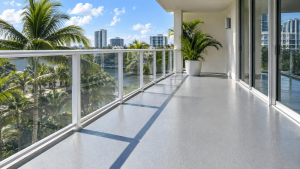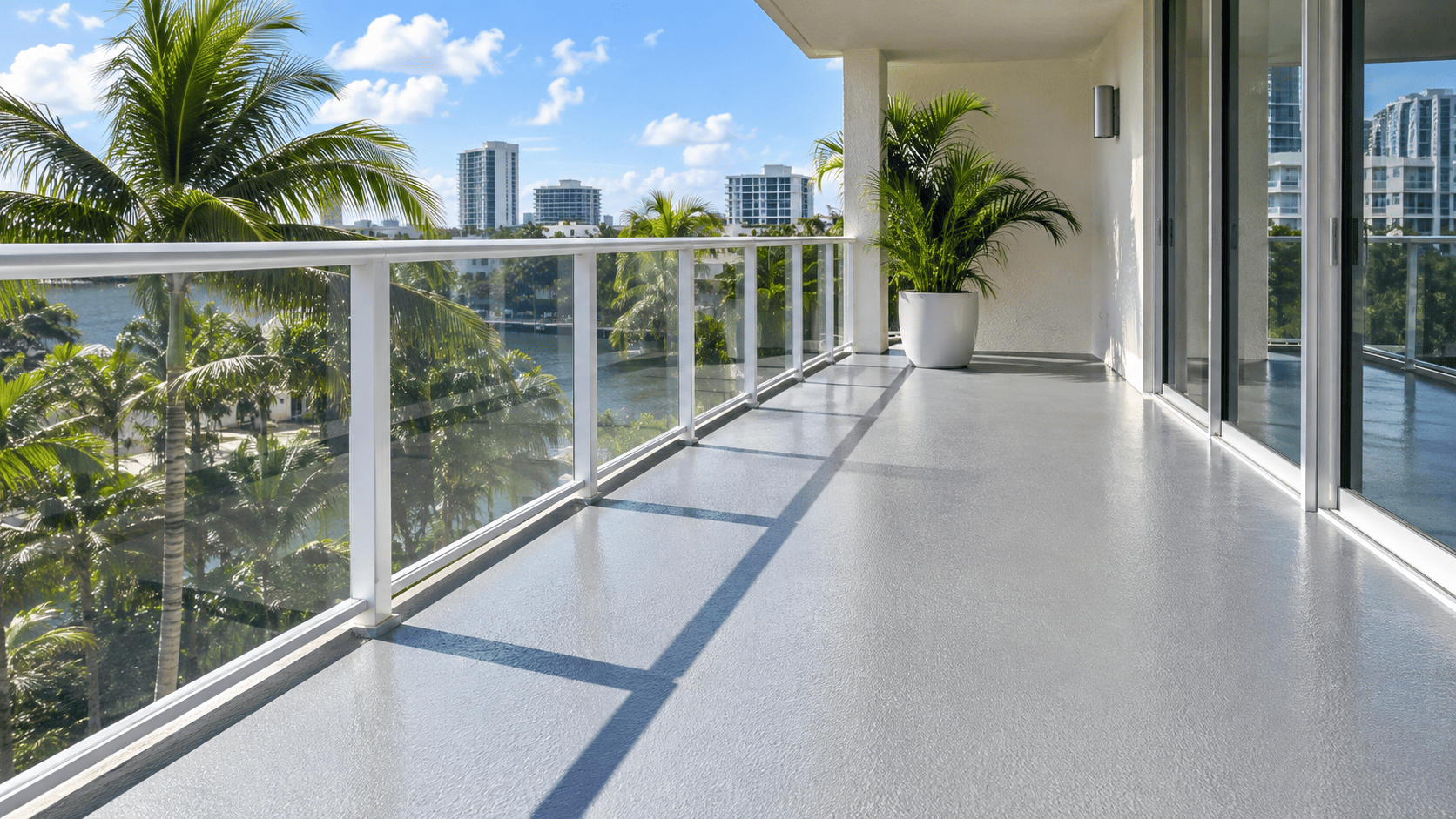
A traffic coating is a liquid-applied, multi-layer waterproofing system with a textured wearing surface that protects concrete balconies, walkways and parking decks from water while withstanding foot or vehicle traffic. It is a widely used form of balcony waterproofing on exposed concrete, and it typically combines a primer, an elastomeric membrane, an aggregate-filled wear coat and a UV-resistant topcoat, as defined by ASTM C957.
On condominium balconies, walkways, pool decks and parking garages, the coating keeps water and chlorides out of the slab. At A Plus, we install waterproofing systems and traffic coatings for condominium associations, HOAs and property managers in Broward, Palm Beach and Miami-Dade counties.
Why Balconies and Walkways Need Waterproofing
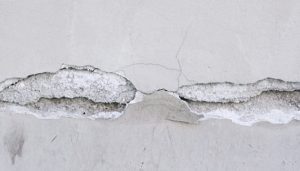
Concrete is porous. Without a waterproofing layer, rainwater carries chlorides from salt air into the slab. When those chlorides reach the reinforcing steel, the steel corrodes, expands and cracks the concrete, which leads to the spalling and delamination that inspections often find on exposed balconies and walkways.
A traffic coating does two jobs at once: it waterproofs the slab and gives a durable, slip-resistant surface for daily use.
Pedestrian vs. Vehicular Traffic Coatings
| Pedestrian traffic coating | Vehicular traffic coating | |
| Where it is used | Balconies, walkways, breezeways, stairs, pool and amenity decks | Parking garages, ramps, drive aisles |
| Traffic load | Foot traffic | Cars, turning tires, braking |
| Build-up | Base membrane plus wear coat and topcoat | Thicker system, often with an additional intermediate coat and more aggregate |
| Areas that wear first | Stair landings, doorways and narrow walkways | Turning radii, ramps, entrances and stop areas |
Using a pedestrian system on a surface that carries vehicles leads to early wear. For parking structures, see our guide to parking garage restoration.
Traffic Coating vs. Balcony Waterproofing Membrane
Not every balcony gets the same solution:
- Exposed concrete balconies and walkways: a traffic coating is the waterproofing and the finished surface in one system.
- Tiled balconies: a waterproofing membrane is installed under the tile. The tile is the wearing surface, and the membrane does the waterproofing.
- Decorative finishes: where the association wants a specific look, a concrete overlay can be combined with a waterproofing system.
The choice depends on the existing finish, slab condition, drainage and use.
Why Coatings Fail Faster in Florida
South Florida combines intense UV exposure, high heat, frequent heavy rain and salt-laden coastal air. These conditions break down topcoats, open small cracks at joints and slab edges, and let water reach the slab sooner.
The most common failure points are:
- Cracks in the coating at slab edges, railing posts and door thresholds
- Worn topcoat and lost aggregate in high-traffic areas
- Failed sealants at joints and wall junctures
- Ponding water caused by poor slope or blocked drains
Many of these problems are covered in our article on common waterproofing failures.
Repair First, Then Coat
A new coating applied over damaged concrete hides the problem without solving it. If chlorides and corrosion are already active in the slab, the steel keeps deteriorating under the fresh coating, and the coating eventually cracks or blisters.
The correct sequence is:
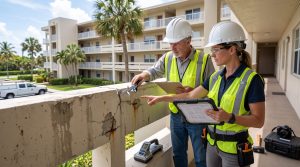
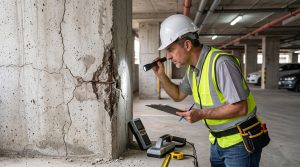
- Evaluate the slab: sound the surface for delamination and identify cracks, spalls and corroded steel.
- Repair the concrete: remove deteriorated concrete, treat the reinforcement and rebuild the section.
- Prepare the surface: clean and profile the concrete so the coating can bond.
- Detail the vulnerable points: seal cracks, joints, railing posts, drains and thresholds.
- Apply the system: primer, membrane, aggregate and topcoat, following the manufacturer’s specifications.
On projects that come out of a concrete balcony inspection, we typically handle the concrete repair and the waterproofing in the same mobilization, so the coating goes down on sound concrete.
Maintenance and Planning
The topcoat is the sacrificial layer of the system. It is designed to wear and be renewed periodically before the membrane underneath is exposed. Typical manufacturer maintenance guidance calls for monthly checks for worn or damaged areas and a thorough review of sealants, drains and junctures twice a year.
For condominiums, waterproofing is more than maintenance. “Waterproofing and exterior painting” is one of the building components a structural integrity reserve study must include, so the condition and remaining life of balcony and walkway coatings directly affect the association’s reserve funding plan.
Frequently Asked Questions
What is a traffic coating?
A traffic coating is a liquid-applied waterproofing system with a textured wearing surface. It protects concrete balconies, walkways and parking decks from water and chlorides while providing a durable, slip-resistant surface for foot or vehicle traffic.
What is the difference between pedestrian and vehicular traffic coating?
Pedestrian systems are designed for foot traffic on balconies, walkways and stairs. Vehicular systems are thicker, usually with an extra intermediate coat and more aggregate, to withstand tires, turning and braking in parking garages.
How long does a traffic coating last?
It depends on traffic, UV exposure and maintenance. The topcoat wears first and is renewed periodically to protect the membrane underneath. Regular inspections and early repair of damaged areas are what extend the life of the full system.
Do you need to repair concrete before applying a traffic coating?
Yes. Cracks, spalls and corroded steel must be repaired first. Coating over damaged concrete traps moisture and chlorides in the slab, so corrosion continues and the new coating fails early.
Sources
- ASTM International. ASTM C957: Standard Specification for High-Solids Content, Cold Liquid-Applied Elastomeric Waterproofing Membrane with Integral Wearing Surface.
- ASTM International. ASTM C1127: Standard Guide for Use of High Solids Content, Cold Liquid-Applied Elastomeric Waterproofing Membrane with an Integral Wearing Surface.
- Florida Legislature. Florida Statutes, Section 718.112(2)(g): Structural Integrity Reserve Study.
- American Concrete Institute. ACI 546R-14: Guide to Concrete Repair.