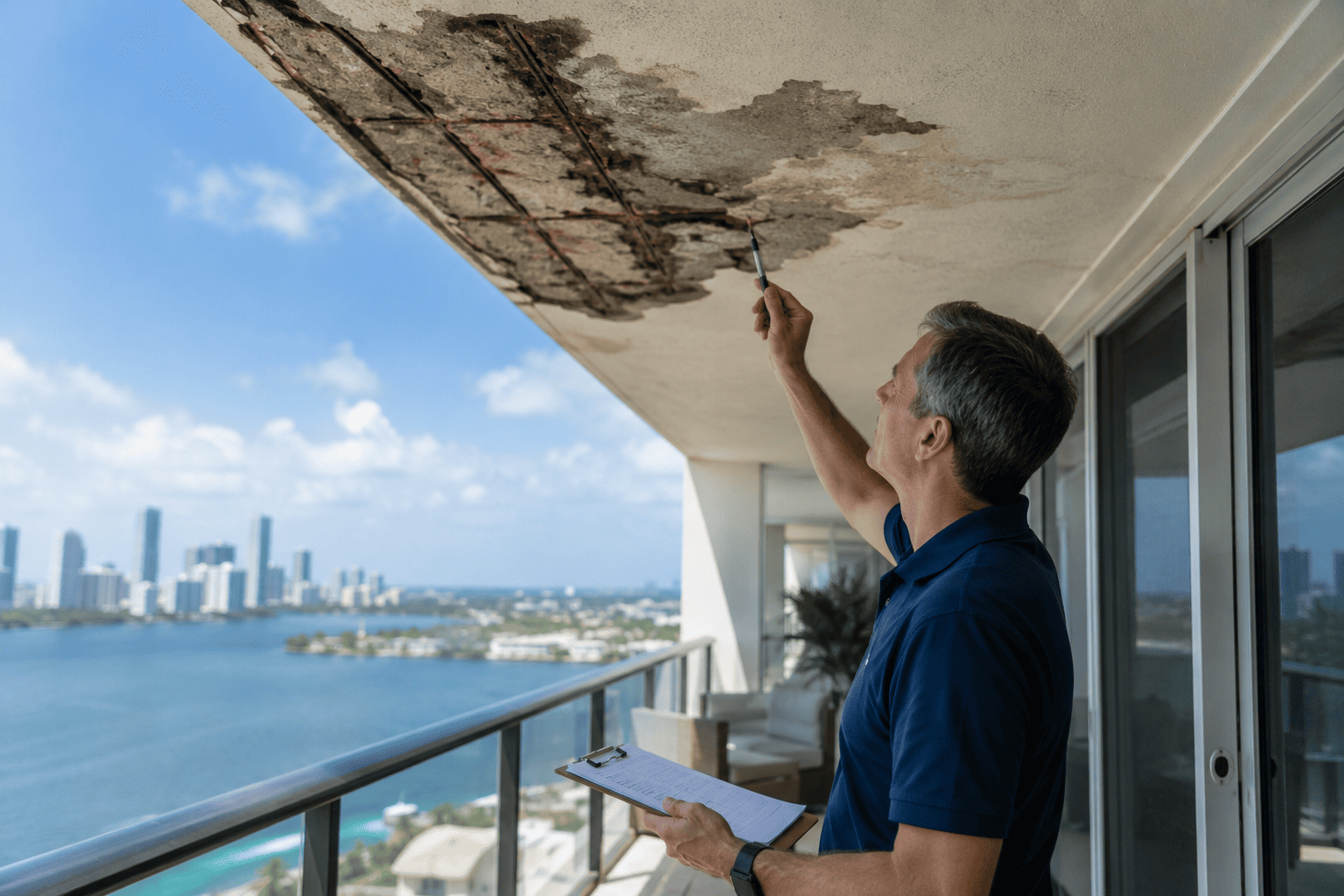
When a condominium, commercial building, parking garage, or other concrete structure shows signs of deterioration, property owners and HOA boards may immediately start looking for a concrete restoration contractor.
However, before deciding how to repair deteriorated concrete, it is important to understand what is causing the damage, how extensive it is, and what repairs are actually needed.
This is where an engineering report can play an important role.
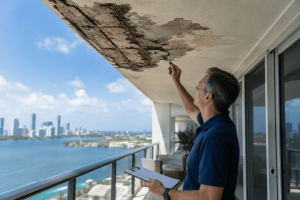
An engineering assessment can help document existing conditions, evaluate deterioration, identify potential causes, and provide recommendations for repair or rehabilitation. ACI guidance for existing concrete structures includes documentation review, field observations, condition surveys, testing when appropriate, evaluation, and reporting as part of the assessment process.
For HOA boards, condominium associations, property managers, and building owners in South Florida, understanding the role of engineering reports can make the concrete restoration process easier to plan and manage.
What Is an Engineering Report?
An engineering report is a professional document that communicates the findings of an evaluation of an existing structure.
For a concrete restoration project, the assessment may include reviewing available building documents, inspecting visible deterioration, documenting damaged areas, and performing testing when necessary.
The report may address conditions such as:
- Concrete cracking
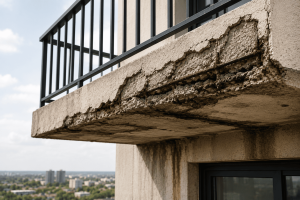
- Concrete spalling
- Delamination
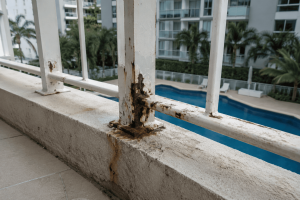
- Exposed reinforcing steel
- Rebar corrosion
- Water intrusion
- Balcony deterioration
- Structural concrete damage
- Parking garage deterioration
The exact scope depends on the building, project, observed conditions, and applicable requirements.
Why Are Engineering Reports Important for Concrete Restoration?
Concrete deterioration is not always as simple as it appears.
For example, a visible crack could have several possible causes. Concrete spalling may be related to corrosion of reinforcing steel. Water intrusion may contribute to deterioration that is not yet visible.
An engineering assessment can help answer important questions:
- What is damaged?
- How extensive is the deterioration?
- What may be causing it?
- Is reinforcing steel affected?
- Does the condition affect structural performance?
- What repairs may be necessary?
- Is additional investigation or testing needed?
ACI’s current ACI CODE-562-25 addresses assessment, repair, and rehabilitation of existing concrete structures, including field investigation, evaluation, repair design, construction documents, inspection, and quality assurance.
Engineering Report vs. Contractor Estimate
It is important for property owners to understand that an engineering report and a concrete restoration estimate serve different purposes.
An engineer evaluates the existing condition and, within the scope of the professional engagement, may provide recommendations, repair designs, or specifications.
A restoration contractor evaluates the project from the construction perspective and provides a proposal describing the work, materials, pricing, schedule, and other project details.
For a major structural concrete restoration project, these roles can work together.
The engineer helps establish what needs to be done and the technical requirements.
The contractor is responsible for performing the restoration work according to the applicable plans, specifications, and project requirements.
How Engineering Reports Help HOA Boards
For an HOA or condominium association, concrete restoration can represent a significant financial investment.
An engineering report can give board members a clearer understanding of the building’s condition before they compare contractor proposals.
Instead of asking only:
“Which contractor has the lowest price?”
the board can ask:
“Does this proposal address the conditions and repair requirements identified by the engineer?”
This can make it easier to compare proposals based on:
- Scope of work
- Repair methods
- Materials
- Waterproofing
- Concrete restoration
- Railing repairs
- Project schedule
- Warranty
- Change-order procedures
- Total project cost
Why Engineering Reports Matter in South Florida
South Florida buildings can be exposed to high humidity, heavy rainfall, coastal salt exposure, moisture intrusion, and long-term environmental deterioration.
These conditions can contribute to concrete deterioration and corrosion of reinforcing steel, particularly in exposed balconies, elevated slabs, parking garages, walkways, and other exterior concrete structures.
For this reason, identifying the cause and extent of deterioration is an important part of planning a successful concrete restoration project in South Florida.