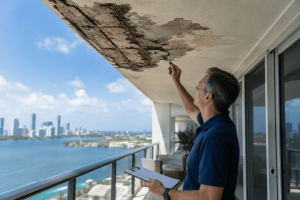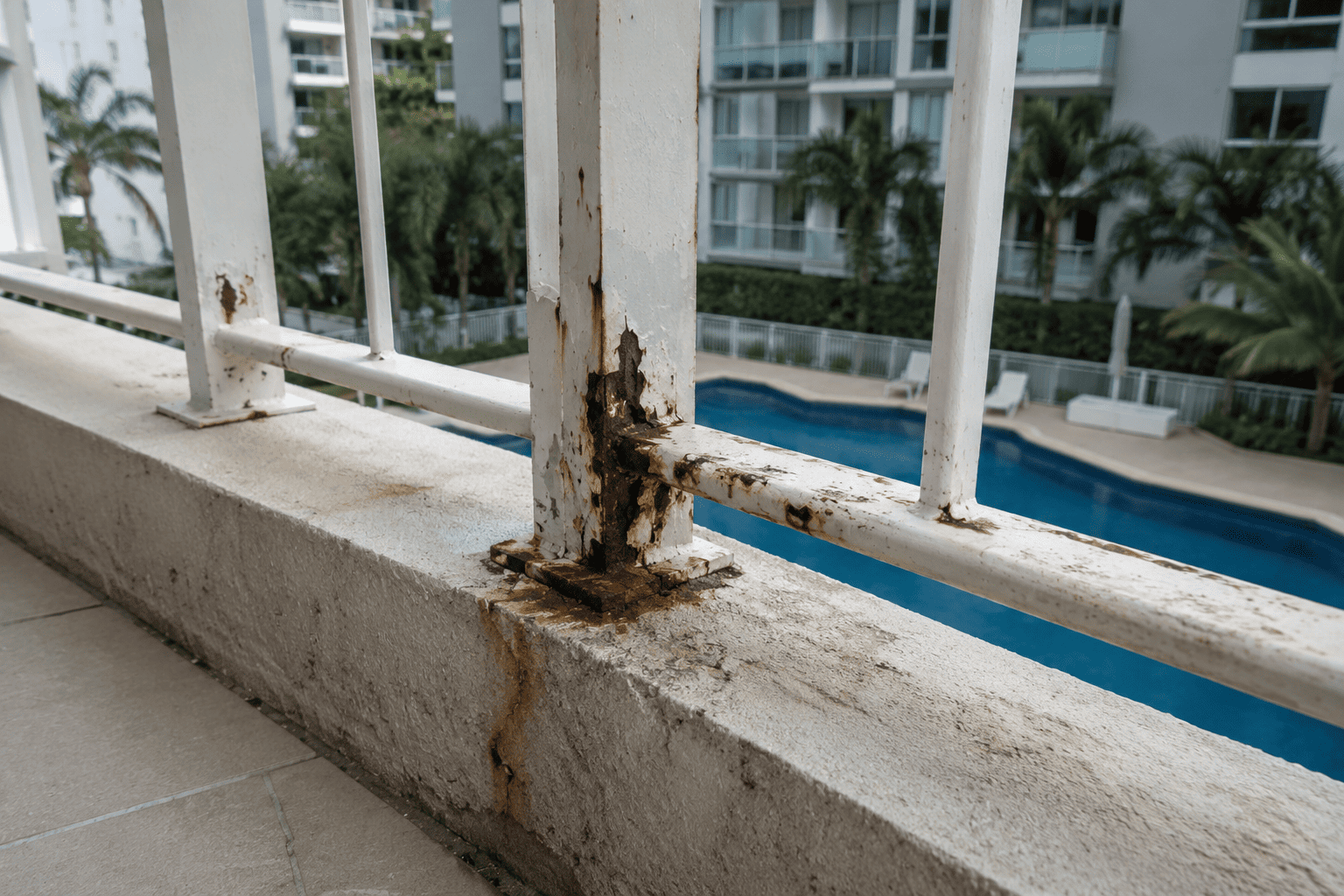
South Florida’s coastal environment can be especially demanding on concrete structures and metal components. High humidity, frequent rainfall, salt-laden air, moisture intrusion, and prolonged exposure to the elements can create conditions that accelerate corrosion.
For reinforced concrete buildings, corrosion can affect the steel reinforcement embedded inside concrete and eventually lead to cracking, delamination, and concrete spalling. Metal railings, balcony railings, fasteners, and other exposed steel components can also deteriorate when protective coatings fail and moisture reaches the underlying metal.
For property owners, condominium associations, HOAs, and property managers, understanding how corrosion develops is important for identifying problems early and protecting the safety, durability, and value of a building.
What Is Corrosion?
Corrosion is the deterioration of metal caused by chemical or electrochemical reactions with its surrounding environment.
Steel embedded in properly designed and maintained concrete is normally protected by the highly alkaline environment inside the concrete. This alkalinity helps create a passive layer around the reinforcing steel that limits corrosion.
However, that protection can be compromised when aggressive substances such as chloride ions penetrate the concrete or when carbonation reduces the concrete’s alkalinity. When moisture and oxygen are also present, corrosion of the reinforcing steel can begin.
The corrosion products, commonly referred to as rust, occupy more volume than the original steel. This expansion creates pressure against the surrounding concrete and can eventually cause cracking and spalling.
How Corrosion Affects Reinforced Concrete
Reinforced concrete combines concrete with steel reinforcement to provide structural strength and durability. The concrete protects the steel from the surrounding environment, while the reinforcement helps the concrete resist tensile forces.
When corrosion begins, however, the relationship between the concrete and steel can change.
1. Chlorides and Moisture Reach the Reinforcement
Small cracks, pores, deteriorated coatings, or areas of water intrusion can provide pathways for moisture and chlorides to move through concrete.
Over time, chloride ions can reach the reinforcing steel and disrupt its protective passive layer.
2. Reinforcing Steel Begins to Corrode
Once the protective condition of the reinforcement is compromised and the necessary environmental conditions are present, an electrochemical corrosion process can develop.
The steel gradually loses material while corrosion products accumulate around the reinforcing bar.
3. Expanding Corrosion Products Create Internal Pressure
Rust occupies significantly more volume than the original steel.
As corrosion products accumulate, they create pressure inside the surrounding concrete. This pressure can cause cracks that often develop along the direction of the reinforcing steel.
4. Cracking Can Progress to Delamination and Spalling
As deterioration progresses, the concrete cover may separate from the underlying material. This condition is known as delamination.
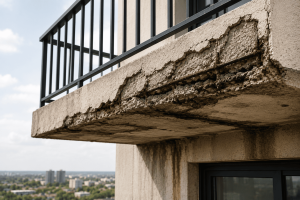
Eventually, portions of concrete can break away, creating what is commonly called concrete spalling.
Exposed reinforcing steel is particularly concerning because once the reinforcement is exposed to the surrounding environment, corrosion can continue and accelerate.
5. Continued Corrosion Can Affect Structural Performance
Corrosion can cause both loss of reinforcing steel cross-sectional area and deterioration of the bond between the steel and concrete.
Depending on the severity and location of the damage, this deterioration can affect the performance of a structural element. Technical guidance from ACI and FHWA identifies corrosion of reinforcing steel as a major mechanism of deterioration in reinforced concrete structures.
How Corrosion Affects Metal Railings
Corrosion is not limited to reinforcing steel hidden inside concrete.
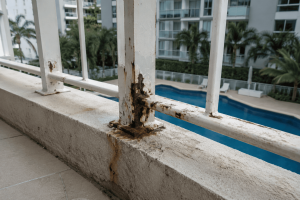
Exterior metal railings are also exposed to moisture, salt air, rain, and other environmental conditions that can cause corrosion.
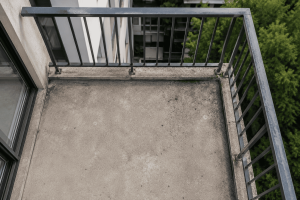
This can be particularly important for balcony railings, stair railings, walkway railings, guardrails, and other exterior metal components.
Common Signs of Railing Corrosion
Property owners and building managers should pay attention to:
- Visible rust or reddish-brown staining
- Peeling or deteriorated protective coatings
- Bubbling paint
- Flaking or scaling metal
- Pitting or rough areas on the metal surface
- Corrosion around bolts and fasteners
- Rust around railing connections
- Deterioration where railings meet concrete
- Loose or unstable railing components
- Cracks or damaged concrete surrounding railing attachments
Surface rust does not automatically mean that a railing has lost its structural capacity. However, visible corrosion should not be ignored because the appearance of the surface may not reveal the full condition of the metal or its connections.
The Federal Highway Administration notes that atmospheric steel corrosion depends on environmental conditions, the steel itself, and the protective measures used. Durable protective coatings are commonly used as part of corrosion protection for structural steel.
Can Corrosion Damage Be Prevented?
Corrosion cannot always be completely eliminated, particularly in aggressive coastal environments. However, proper design, maintenance, inspections, waterproofing, and protective systems can help reduce exposure and slow deterioration.
Important preventive measures can include:
Regular Inspections
Routine inspections can help identify cracks, rust staining, spalling, exposed reinforcement, deteriorated coatings, and railing problems before they become more extensive.
Early detection can help property owners address localized deterioration before a larger restoration project is required. A Plus emphasizes regular inspection and early identification of deterioration for coastal properties.
Waterproofing and Moisture Control
Keeping unnecessary moisture out of concrete is an important part of long-term durability.
Waterproofing systems, properly maintained joints, sealants, drainage, and protective coatings can help limit moisture and chloride intrusion where appropriate.
Protective Coatings for Metal
Properly selected and maintained protective coatings can help isolate exposed metal from moisture and other environmental factors.
When a coating system fails, simply applying another coat over deteriorated material may not address the underlying corrosion.
Prompt Concrete Repairs
Cracks, delamination, and spalling should be evaluated rather than ignored.
Addressing deterioration early can help prevent additional moisture and chloride penetration and may reduce the extent of future repairs.
How Is Corrosion Damage Repaired?
The appropriate repair method depends on the location, severity, cause, and extent of deterioration.
A professional concrete restoration project may involve several stages.
Inspection and Evaluation
The first step is determining what is actually happening.
A visual inspection can identify visible signs such as cracking, rust staining, spalling, exposed reinforcement, and deteriorated railings. Depending on the project, additional investigation may be necessary to understand the extent of hidden deterioration.
Removal of Deteriorated Concrete
Where reinforced concrete has deteriorated, damaged or unsound concrete may need to be removed to expose the affected area and allow proper restoration.
Treatment of Reinforcing Steel
Corroded reinforcement may require cleaning and appropriate corrosion-control treatment depending on its condition and the repair specifications.
The objective is not simply to make the steel look clean. The repair must address the deterioration mechanism and provide an appropriate system for restoring and protecting the affected area.
Concrete Restoration
Once the affected reinforcement and surrounding area have been properly prepared, compatible repair materials can be used to restore the concrete.
Proper surface preparation, material selection, placement, and curing are important for achieving a durable repair.
Railing Repair or Replacement
Depending on the condition of the metal, railing restoration may involve surface preparation and protective coating systems or, when deterioration is more extensive, repair or replacement of affected components.
The condition of the connections and surrounding concrete should also be considered.
Waterproofing and Protective Systems
Where moisture intrusion contributes to deterioration, waterproofing or protective coating systems may be part of the restoration strategy.
The goal is to address both the visible damage and the environmental conditions that contributed to the deterioration.
When Should You Contact a Concrete Restoration Professional?
If you notice rust stains, exposed rebar, concrete spalling, significant cracking, deteriorated balcony railings, or corrosion around railing connections, it is worth having the condition evaluated.
This is particularly important for condominiums, HOAs, commercial buildings, parking garages, balconies, elevated walkways, and other structures where deterioration can affect residents, visitors, or building operations.
A visual symptom does not always reveal the full extent of the underlying problem. Professional evaluation can help determine whether the issue is primarily cosmetic, related to surface deterioration, or indicative of a larger structural restoration need.