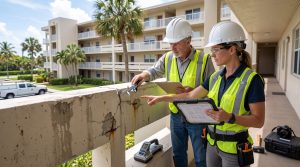
Properties located along Florida’s coastline face unique environmental conditions that can accelerate the deterioration of concrete structures. Constant exposure to moisture, salt air, heavy rain, and temperature fluctuations can gradually compromise the structural integrity of balconies, walkways, parking garages, columns, and other critical building components.
While Florida law requires structural inspections at set intervals, annual concrete inspections have become one of the most effective best practices for coastal properties — helping detect deterioration early, protect occupant safety, and prevent costly repairs before they escalate.
How Coastal Conditions Impact Concrete Structures
Coastal environments significantly speed up the aging process of concrete structures.
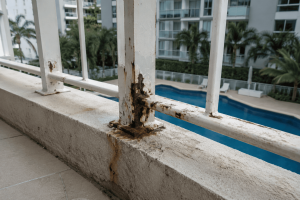
Salt carried through the air can penetrate small cracks and pores in the concrete, eventually reaching the embedded steel reinforcement bars. Once the steel begins to corrode, it expands and creates internal pressure within the concrete, leading to cracking, spalling, and structural weakening.
This type of deterioration is especially common in:
- Balconies
- Elevated walkways
- Parking structures
- Exterior stairways
- Exposed columns and beams
- Building façades near the ocean
What Can an Annual Concrete Inspection Detect?
Routine inspections help identify issues before they develop into major structural problems.
Structural Cracks
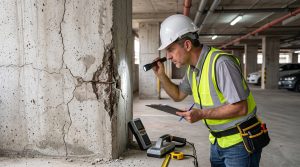
Cracks may seem minor at first, but they are often an early warning sign of structural movement or water intrusion.
Reinforcing Steel Corrosion
Internal corrosion can develop for years before becoming visible. Professional inspections help detect early signs before significant damage occurs.
Concrete Spalling
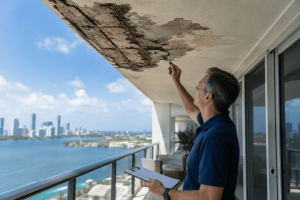
As corroded steel expands, it can cause the surrounding concrete to crack and break apart. Falling concrete not only weakens the structure but also creates serious safety hazards for residents and visitors.
Waterproofing Failures
Damaged or deteriorated waterproofing systems allow moisture intrusion that accelerates structural deterioration.
Balcony and Walkway Deterioration
These areas are continuously exposed to rain, humidity, and salt air, making them particularly vulnerable to damage over time.
Key Benefits of Annual Inspections
Preventive concrete inspections provide important advantages for property owners, condominium associations, and building managers
Improved Occupant Safety
Identifying damage early helps reduce the risk of structural failures and accidents.
Lower Repair Costs
Targeted repairs are typically far less expensive than large-scale restoration projects required after years of neglected deterioration.
Extended Structural Lifespan
A proactive maintenance program helps preserve the strength, stability, and performance of concrete structures over time.
Protection of Property Value
Well-maintained buildings retain their market value and remain more attractive to buyers and investors.
Better Maintenance Planning
Routine inspections allow property managers to schedule repairs strategically and avoid unexpected emergency expenses.
The Importance of Inspections for Florida Code Compliance
Florida has strengthened building safety and structural evaluation requirements, particularly for condominiums and multifamily properties. Under the Milestone Inspection program, buildings must undergo a structural inspection at 25 years for coastal properties (30 years for others), and every 10 years after that.
Regular inspections help associations and property managers:
- Maintain records of the building’s structural condition
- Identify issues before recertification processes
- Prepare for mandatory Milestone Inspections
- Reduce compliance risks
- Better protect residents and property owners
In addition, documented inspection programs demonstrate an active commitment to building maintenance and long-term safety.
How Inspections Help Prevent Major Restoration Projects
Many of the most expensive structural repairs begin as small problems that go unnoticed for years.
Annual inspections help detect issues related to:
- Reinforcement corrosion
- Balcony deterioration
- Beam and column damage
- Waterproofing failures
- Structural cracking
- Water intrusion damage
Addressing these issues early can help prevent extensive restoration projects and protect the overall integrity of the structure.
Buildings located near the ocean are exposed every day to conditions that accelerate concrete deterioration. For that reason, annual inspections should not be viewed as an added expense, but as a long-term investment in safety, regulatory compliance, and property preservation.
At A Plus Concrete Restoration, we help property managers, HOA boards, and condominium associations detect damage early, plan repairs efficiently, and ensure that balconies, walkways, parking structures, and other critical building components continue to perform safely for years to come.
Sources
- Florida Senate Bill 4-D (2022) — Condominium and Cooperative Safety, Milestone Inspections and Structural Integrity Reserve Studies: flsenate.gov
- Florida Department of Business and Professional Regulation — Milestone Inspection Requirements: myfloridalicense.com
- American Concrete Institute (ACI 318) — Building Code Requirements for Structural Concrete: concrete.org
- Federal Emergency Management Agency (FEMA) — Coastal Construction Manual, Concrete Deterioration in Marine Environments: fema.gov
- National Institute of Standards and Technology (NIST) — Corrosion of Embedded Metals in Concrete: nist.gov