Concrete damage is not always easy to interpret. In many cases, surface changes may appear minor while deeper structural deterioration is already developing. In other situations, visible imperfections may be primarily aesthetic and pose little immediate risk to structural performance. Understanding the difference between structural and cosmetic concrete damage is essential for property owners and building managers, particularly in Florida’s coastal environment.
Understanding Concrete Damage in Buildings
Concrete damage refers to any change in the condition of a concrete element that affects its appearance, performance, or durability. Damage can result from environmental exposure, material aging, mechanical stress, or chemical reactions within the concrete.
While damage is often categorized by how it looks, the most important distinction lies in how it affects the structural integrity of the building. This distinction determines the level of risk, urgency, and type of intervention required.
What Is Cosmetic Concrete Damage?
Cosmetic concrete damage affects the surface appearance of concrete without significantly compromising its structural capacity. This type of damage is typically limited to the outer layer of the material and does not involve deterioration of embedded reinforcement.
Common Types of Cosmetic Damage
- Hairline surface cracks
- Minor surface discoloration
- Efflorescence (white mineral deposits)
- Small surface blemishes or texture variations
These conditions may be visually noticeable but often develop due to surface drying, environmental staining, or minor material movement rather than structural distress.
Characteristics of Cosmetic Damage
- Primarily aesthetic in nature
- Limited depth and extent
- Does not directly affect load-bearing capacity
- Often stable over time when environmental conditions remain unchanged
Cosmetic damage can still worsen if environmental exposure continues, but it does not typically indicate immediate structural risk.
What Is Structural Concrete Damage?
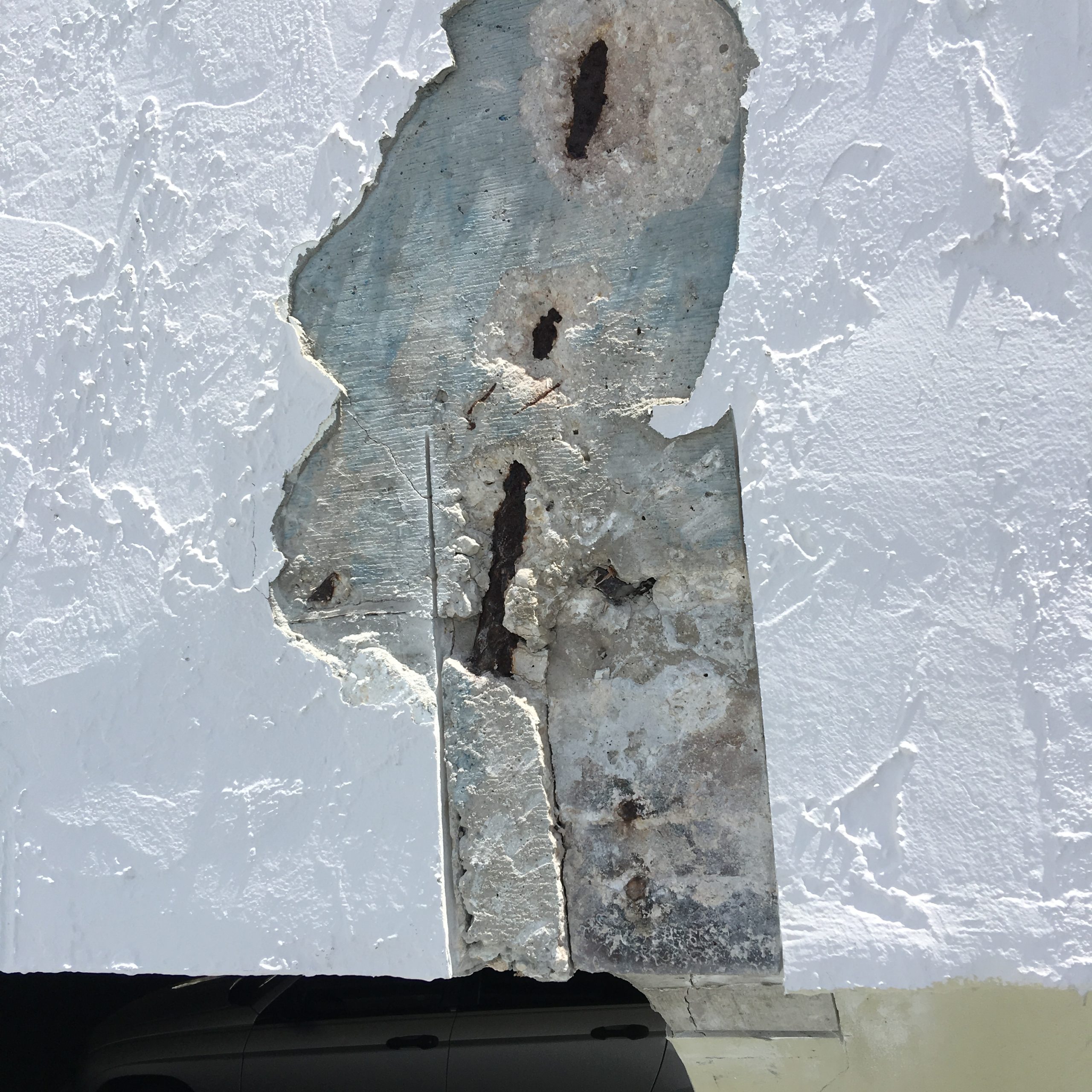
Structural concrete damage affects the performance, strength, or stability of a concrete element. This type of damage is usually associated with internal deterioration mechanisms that compromise the concrete and its reinforcing steel.
Common Types of Structural Damage
- Concrete spalling and delamination
- Corrosion of reinforcing steel
- Loss of concrete section
- Cracking associated with structural movement or corrosion pressure
Structural damage often develops internally before becoming visible at the surface, making early identification critical.
Characteristics of Structural Damage
- Involves deterioration below the surface
- Often associated with reinforcement corrosion
- Can reduce load-carrying capacity
- Progresses over time if left unaddressed
In coastal Florida, structural damage is frequently linked to chloride exposure, moisture intrusion, and carbonation.
Key Differences Between Structural and Cosmetic Concrete Damage
| Aspect | Cosmetic Damage | Structural Damage |
| Impact | Visual appearance | Structural performance |
| Depth | Surface-level | Internal |
| Risk Level | Low | Moderate to high |
| Progression | Often slow or stable | Progressive over time |
| Typical Causes | Drying, staining, minor movement | Corrosion, environmental exposure |
This distinction is critical when evaluating building conditions and prioritizing repairs.
Why the Distinction Matters in Florida’s Coastal Climate
Florida’s coastal environment accelerates concrete deterioration due to salt exposure, high humidity, and temperature fluctuations. Conditions that may remain cosmetic in inland locations can transition into structural damage more rapidly near the coast.
For example, surface cracks that allow moisture and chlorides to penetrate the concrete can eventually lead to corrosion of reinforcing steel. Over time, this process can transform an initially cosmetic issue into a structural concern.
How to Interpret Visible Concrete Damage
Visible damage alone does not always indicate severity. Interpreting what you see requires understanding the context, location, and exposure conditions of the affected concrete.
Factors to consider include:
- Proximity to coastal environments
- Age of the structure
- Type of concrete element (balcony, slab, beam, garage)
- Extent and pattern of damage
Because internal deterioration may not be immediately visible, professional evaluation is often necessary to determine whether damage is cosmetic or structural.
When Cosmetic Damage Can Become Structural
Cosmetic damage can evolve into structural damage when environmental exposure continues unchecked. Moisture intrusion, chloride ingress, and repeated thermal movement can deepen surface imperfections and initiate internal deterioration processes.
In South Florida, this progression is common due to persistent humidity and salt exposure. Monitoring and timely assessment help prevent minor issues from developing into more serious structural conditions.
Concrete Repair and Restoration Services
Understanding the difference between structural and cosmetic concrete damage allows property owners and building managers to make informed decisions about building safety and long-term durability. While cosmetic damage may affect appearance, structural damage impacts performance and requires professional attention.
A Plus Concrete Restoration provides licensed concrete repair and restoration services throughout South Florida, including evaluations and repairs for parking garages, balconies, walkways, and coastal building structures. Their experience with Florida’s environmental conditions allows them to address both surface-level and structural concrete deterioration.
For buildings exposed to coastal conditions or showing signs of concrete distress, professional assessment helps determine the nature of the damage and the appropriate restoration approach.
“This article is for informational purposes only and does not replace an evaluation by a qualified engineer or inspector.”