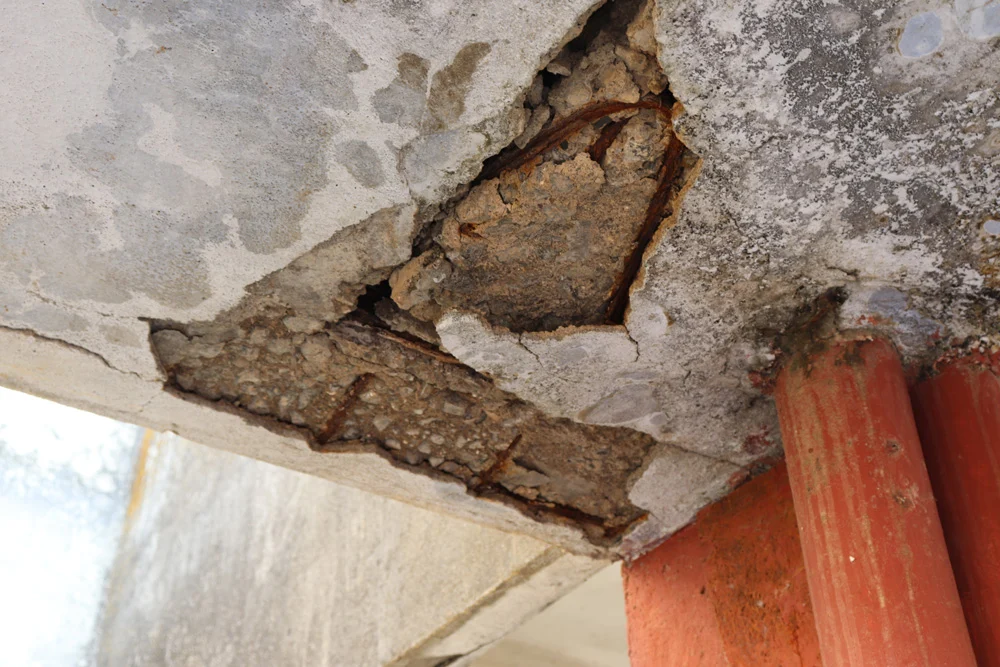
Concrete spalling is one of the most common and concerning forms of concrete deterioration in South Florida. It affects residential, commercial, and multifamily buildings, particularly those exposed to coastal conditions. While spalling is often visible at the surface, it is typically the result of deeper physical and chemical processes occurring within reinforced concrete over time.
Understanding what causes concrete spalling, how it is properly repaired, and why prevention is especially critical in South Florida provides essential context for evaluating structural durability in coastal environments.
What Is Concrete Spalling?
Concrete spalling refers to the flaking, chipping, or breaking away of concrete from a surface. It commonly occurs when internal stresses exceed the tensile strength of the concrete, causing portions of the material to detach.
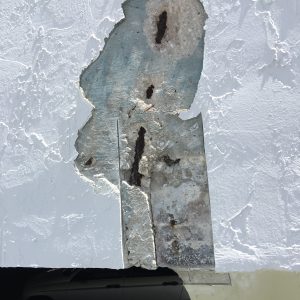
In reinforced concrete structures, spalling is frequently associated with corrosion of embedded steel reinforcement. As steel corrodes, it expands, exerting outward pressure on the surrounding concrete. This internal expansion eventually leads to surface separation and material loss.
Primary Causes of Concrete Spalling in South Florida
Concrete spalling rarely has a single cause. In South Florida, it is typically the result of multiple interacting environmental and material-related factors.
Chloride Exposure and Reinforcement Corrosion
Chloride intrusion is the leading cause of concrete spalling in coastal regions. Chlorides originate from marine aerosols, salt spray, and wind-driven rain. These salts penetrate the concrete through capillary absorption and diffusion.
Once chlorides reach the reinforcing steel, they disrupt the protective alkaline environment that normally prevents corrosion. Corroding steel expands in volume, generating internal tensile stresses that the concrete cannot accommodate, leading to spalling.
High Humidity and Persistent Moisture
South Florida’s climate maintains high relative humidity levels year-round. Concrete surfaces often remain damp for extended periods, creating ideal conditions for corrosion and chemical reactions.
Moisture acts as a transport medium for chlorides and oxygen, both of which are required for corrosion to progress. Continuous moisture exposure accelerates the deterioration process and increases the likelihood of spalling.
Carbonation of Concrete
Carbonation occurs when carbon dioxide from the atmosphere penetrates the concrete and reacts with calcium hydroxide in the cement paste. This reaction lowers the concrete’s alkalinity, reducing its ability to protect embedded steel reinforcement.
In warm, humid environments like South Florida, carbonation can progress more rapidly. When carbonation combines with chloride exposure, the risk of reinforcement corrosion and subsequent spalling increases significantly.
Thermal Movement and Environmental Stress
Concrete structures in South Florida experience daily temperature fluctuations and intense solar exposure. These conditions cause repeated cycles of thermal expansion and contraction.
Over time, thermal movement contributes to microstructural stress within the concrete. When combined with moisture and corrosion-related expansion, these stresses can accelerate surface failure and spalling.
Areas Most Commonly Affected by Spalling
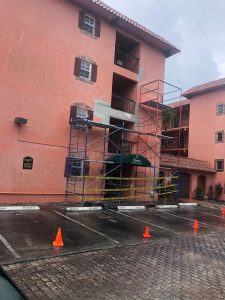
In South Florida buildings, concrete spalling frequently appears in areas with high environmental exposure or structural loading, including:
- Balconies and cantilevered slabs
- Parking garages and ramps
- Walkways and podium decks
- Building façades and exposed beams
- Coastal condominium structures
These components are often directly exposed to salt air, moisture, and temperature extremes.
Concrete Spalling Repair Options
Repairing concrete spalling requires more than surface patching. Effective repair strategies address both the visible damage and the underlying causes.
Removal of Deteriorated Concrete
The first step in proper spalling repair is removing all loose and delaminated concrete until sound material is reached. This process exposes the condition of the reinforcing steel and prevents future bond failures.
Treatment of Reinforcing Steel
Exposed reinforcing steel must be cleaned to remove corrosion products. Depending on the condition of the steel, corrosion-inhibiting treatments or protective coatings may be applied to reduce the risk of continued corrosion.
Concrete Restoration and Patching
After steel treatment, repair mortars or restoration materials compatible with the existing concrete are applied. Proper material selection and installation are critical to ensure long-term durability in coastal conditions.
Protective Systems and Surface Treatments
In many cases, protective coatings, waterproofing systems, or overlays are applied to repaired surfaces. These systems help limit moisture and chloride penetration, extending the service life of the repair.
Preventing Concrete Spalling in Coastal Florida
While spalling cannot always be avoided, preventive measures can significantly slow its progression.
Prevention strategies often focus on limiting environmental exposure, controlling moisture intrusion, and monitoring structural conditions over time. Regular inspections and early identification of deterioration mechanisms are particularly important in coastal environments, where damage can progress internally long before becoming visible.
Why Concrete Spalling Is a Long-Term Structural Concern
Although concrete spalling may initially appear as a surface-level issue, it is often an indicator of ongoing internal deterioration. Left unaddressed, the processes that cause spalling can continue to compromise reinforcing steel and reduce structural capacity.
In South Florida’s aggressive coastal climate, understanding spalling as part of a broader deterioration process is essential for evaluating building safety and longevity.
Professional Restoration Services in South Florida
Concrete spalling in South Florida is primarily driven by chloride exposure, moisture, carbonation, and environmental stress. These factors interact with the inherent properties of reinforced concrete, making coastal structures particularly vulnerable to long-term deterioration.
A Plus Concrete Restoration provides professional concrete restoration and repair services throughout Broward, Palm Beach, and Miami-Dade counties. Services include structural concrete restoration, parking garage rehabilitation, balcony repairs, waterproofing systems, and protective concrete overlays designed for coastal environments.
For buildings experiencing concrete deterioration or operating in high-exposure coastal conditions, working with experienced restoration specialists can help protect structural integrity and extend service life. To learn more about available restoration solutions, visit the A Plus Concrete Restoration services page or contact their team for a professional evaluation.
“This article is for informational purposes only and does not replace an evaluation by a qualified engineer or inspector.”