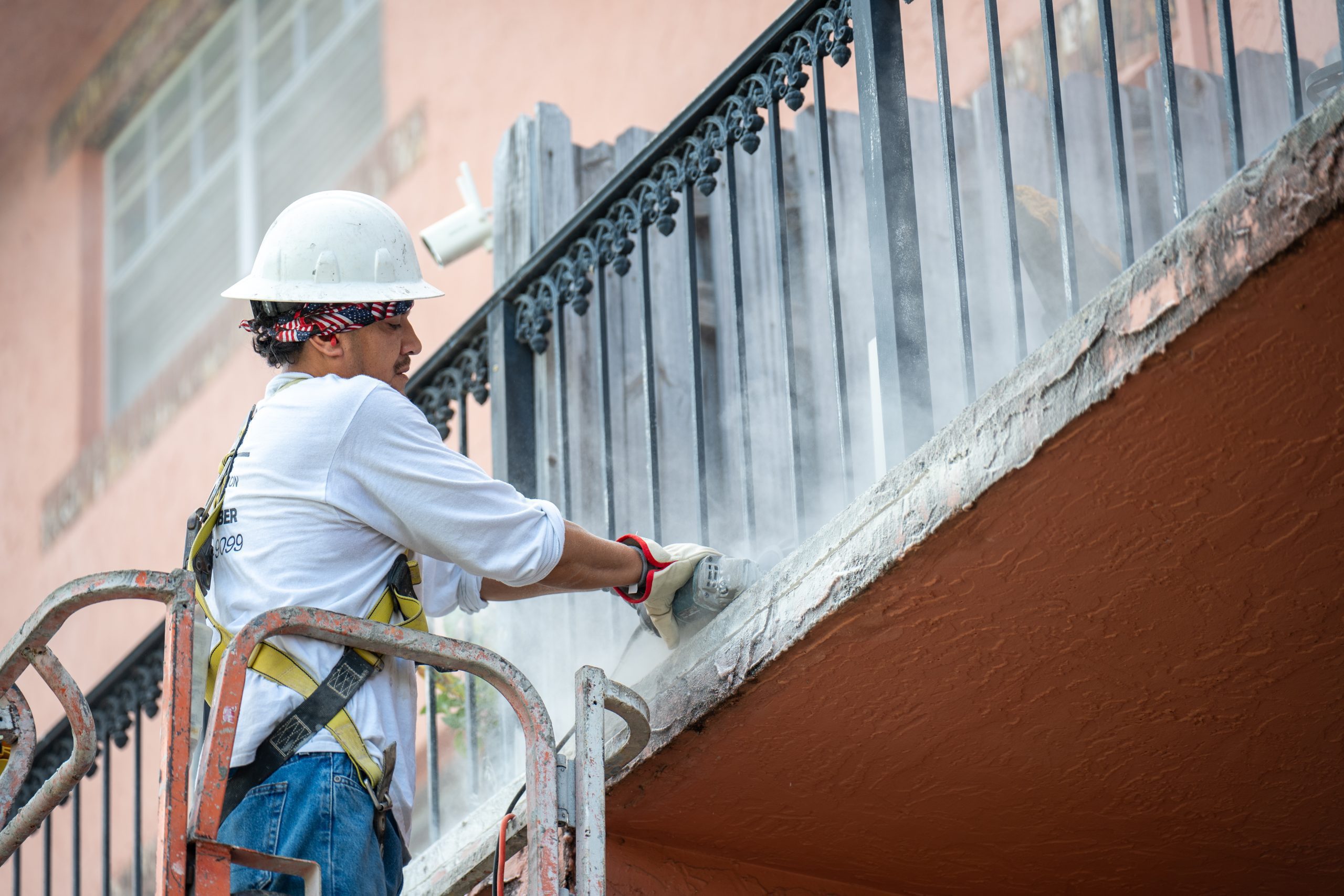
Coastal Florida presents one of the most aggressive environments for reinforced concrete structures. Buildings located near the ocean are continuously exposed to salt-laden air, high humidity, intense sunlight, and fluctuating temperatures. These environmental conditions accelerate physical and chemical processes within concrete that, over time, lead to material degradation. Understanding these underlying causes provides insight into why concrete deterioration is more prevalent and severe in coastal regions.
The Nature of Concrete in Coastal Environments
Concrete is a porous, composite material made of cement paste and aggregates. While it is often perceived as a solid and inert material, concrete naturally allows the movement of air, moisture, and dissolved substances through its pore structure. In coastal environments, this permeability becomes a critical factor, as airborne salts and moisture are able to penetrate the concrete matrix more readily than in inland locations. The interaction between concrete and the surrounding environment plays a central role in long-term durability.
Chloride Exposure and Salt-Induced Corrosion
One of the primary causes of concrete deterioration in coastal Florida is exposure to chlorides. Chlorides originate from marine aerosols, wind-driven salt spray, and coastal rainfall. These salts settle on concrete surfaces and gradually migrate into the material through capillary absorption and diffusion.
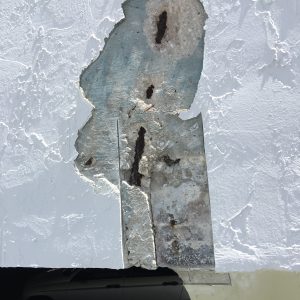
As chlorides penetrate deeper into the concrete, they reach the embedded steel reinforcement. Once a critical chloride concentration is exceeded, the protective alkaline environment surrounding the steel is compromised, initiating corrosion. The corrosion of reinforcing steel is an electrochemical process that causes the steel to expand, generating internal stresses within the concrete and accelerating deterioration from the inside out.
High Humidity and Persistent Moisture
Florida’s coastal climate is characterized by consistently high relative humidity and frequent rainfall. These conditions keep concrete surfaces in a near-constant state of moisture exposure. Moisture plays a significant role in concrete deterioration by acting as a transport medium for chlorides, oxygen, and other reactive agents.
Prolonged moisture saturation also increases the rate of chemical reactions within the concrete. When concrete remains wet for extended periods, internal processes such as corrosion and chemical alteration of cement compounds progress more rapidly than in drier environments.
Carbonation of Concrete in Coastal Conditions
Carbonation is a chemical process in which carbon dioxide from the atmosphere penetrates the concrete and reacts with calcium hydroxide in the cement paste. This reaction reduces the alkalinity of the concrete, lowering its natural ability to protect embedded steel reinforcement from corrosion.
In coastal Florida, warm temperatures and high humidity create favorable conditions for carbonation to occur at an accelerated rate. When carbonation advances through the concrete cover and combines with chloride exposure, the risk of reinforcement corrosion increases significantly, contributing to long-term structural degradation.
Thermal Effects and Environmental Stress
Concrete structures in coastal Florida are subjected to daily and seasonal temperature variations. These fluctuations cause repeated cycles of thermal expansion and contraction within the material. Over time, this movement introduces internal stresses that can weaken the concrete’s microstructure.
Thermal effects become more pronounced when combined with moisture and salt exposure. Temperature changes influence moisture movement within the concrete, further facilitating the transport of chlorides and other aggressive agents into the material.
Environmental Factors Unique to Florida’s Coastline
Several environmental conditions unique to Florida’s coastline intensify concrete deterioration. High salinity levels in the air increase chloride deposition on building surfaces. Persistent humidity limits the ability of concrete to dry out, maintaining conditions favorable to chemical reactions. Tropical storms and hurricanes introduce wind-driven rain and salt spray, increasing the frequency and severity of exposure events. Together, these factors create a highly aggressive environment for reinforced concrete structures.
Why Concrete Deterioration in Coastal Florida Is a Progressive Process
Concrete deterioration in coastal environments does not occur suddenly. It is the result of progressive, interacting mechanisms that develop internally over time. Chloride ingress, carbonation, moisture exposure, and thermal stress often act simultaneously, gradually reducing the durability of the concrete and its embedded reinforcement. These processes can advance for years before external signs become apparent, making environmental exposure a fundamental driver of long-term deterioration.
Related Restoration Solutions
The environmental conditions of coastal Florida including salt exposure, high humidity, carbonation, and temperature fluctuations create a challenging context for concrete durability. These factors work together to initiate and accelerate deterioration mechanisms well before visible symptoms appear.
For property owners, engineers, and building managers in Southeast Florida who are encountering or monitoring concrete degradation, it is important to consider professional evaluation and restoration planning.
At A Plus Concrete Restoration, licensed and insured specialists provide comprehensive concrete restoration and repair services across Broward, Palm Beach, and Miami-Dade counties, addressing structural degradation caused by salt exposure, moisture, and environmental stress. Services include structural concrete restoration, waterproofing systems, concrete overlays, and general contracting for balconies, walkways, parking structures, and other building components.
If your building is showing signs of concrete distress or facing long-term environmental exposure, consulting with experienced restoration professionals can help protect structural integrity and extend service life. To explore tailored restoration strategies or schedule a free consultation with the team at A Plus Concrete Restoration, visit the services page or contact their experts directly.
“This article is for informational purposes only and does not replace an evaluation by a qualified engineer or inspector.”